Tuesday, November 24, 2015

Walter Page

    Walter Page was born February 9th, 1900 in Gallatin, Missouri. He lived to be 57 years old, passing in 1957.  Page is most known as a Jazz bass player and the leader of the famous Blue Devils Band. He is also a principle figure in the rise of 4/4 meter in Jazz.
    Early in his career, Page played baritone sax and tuba. His musical training began at Lincoln High School in Missouri under the training of Major N Clark Smith. While at Lincoln, he was in the school's brass band, playing bass drum and bass horn. He also began to play the string bass while in high school. His formal studies continued at the University of Kansas at Lawrence. 


In an interview in The Jazz Review, Page remembers Major Smith:

"Major N. Clark Smith was my teacher in high school. He taught almost everybody in Kansas City. He was a chubby little cat, bald, one of the old military men. He wore glasses on his nose and came from Cuba around 1912 or 1914. He knew all the instruments and couldn’t play anything himself, but he could teach. ...[O]ne day he was looking for a bass player and no one was around, so he looked at me, and said, "Pagey, get the bass." I said, "But," and he repeated, "Get the bass." That's when I got started."

   While at KU, Page began to play for big bands
like the Bennie Moten and Dave Lewis Band on weekends. "Fridays and Sundays I played with Bennie Moten and Saturdays with Dave Lewis who was paying me $7.00 a night. Bennie was paying for my food and transportation, so when I'd be finished a weekend [sic] I'd made me $20.00 and had a ball." After leaving school in 1923, Page toured on the TOBA circuit.

  In 1925, Page formed the Blue Devils in Oklahoma City. The Blue Devils were a commonwealth, territorial band primarily based in Oklahoma and Texas. The devils had a modern rhythm section  that improvised from head arrangements. According to Page, they shared the same musical "ideas." They also toured Kansas and Missouri. The bands first and only recordings, "Blue Devil Blues" and "Squabblin" were made in Kansas City for the Vocalion label in the studios of WDAF in 1929.

In his autobiography, Jazz musician Count Basie recalls the first time he ever saw the Blue Devils Play:

The leader was the heavyset, pleasant-looking fellow playing the bass and doubling on the baritone. His name was Walter Page, and at that time the band was known as Walter Page and his Blue Devils. But you could also hear the musicians addressing him by his nickname, which was Big 'Un. You could also tell right away that they didn't just respect him because he was the boss; they really liked him and felt close to him because he was also one of them."

  While in Kansas City, Page had it bad for the Moten band. He wanted to battle them in the "worst way." Instead, Bennie Moten began to pick apart the Blue Devils and recruit band members. In 1932 after rebuilding the band, Page handed it off to Buster Smith and Ernie Williams due to financial problems.                                                                                               The next year, Page joined the last great Moten band. Later he joined the Barons of Swing and the Count Basie band. After 1948, Page spent the rest of his career freelancing in swing bands.                                                                                                                                         

  In an interview published only a month before his death in The Jazz Review, Walter Page expressed how he never sought praise and that he just wanted to know that he was appreciated for his influence on music.


Bibliography

Nadal, James. "Walter Page @ All About Jazz." All About Jazz Musicians. Accessed November 25, 2015. http://musicians.allaboutjazz.com/walterpage.

Driggs, Frank. "About My Life In Music by Walter Page, as Told to Frank Driggs." The Jazz Review, Nov. 1958: 12-15. Print.

Thursday, May 23, 2013

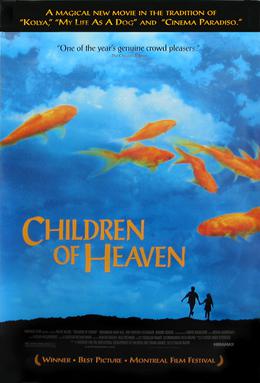
Childrennnnnn of Heaveennnn

       The dynamic that the two main characters share demonstrate that optimism for brother and sister relationships all over the world.. Rarely, are sister and brother relationships characterized in movies in such a positive way. Commonly, only spouse realtionships are depicted or highlighted in film. The status quo is seeing sisters and brothers argue and fight but to see them interact with one another in a form that is independent of their parents is unique. As a viewer, the subject media is quite admiring, partially because I don't have a relationship with my brother, but overall because  it is just a creative story. It's interesting to see how the role of a family plays out because of something as mundane as a pair of shoes. 
     There's always those situations that makes you question or re-evaluate the things in life that has no meaning. Or at lease, on the surface, they seem as if they have no meaning. My mother always told me to appreciate every thing in life that I had because there was always someone who did not have those items. Not only does this movie characterize how we need to be grateful but also how important it is to give and provide for others who are less forunate than ourselves. The pair of shoes represents their own character and kind of takes on a life of their own as they travel through the slums of India to their rightful owner. Movies that demonstrate the real struggles of families are always a plus in my book. As a filmaker, personally, I enjoy realistic depictions of life instead of fantasies. What is raw is just what's more appealing in my eyes. The sence of sacrafice and optimism in each character really sets the tone of the family and the film. The film does a good job of carrying that tone over to the audience. For instance, in the scene in which Ali is running the marathon, everyone is on the edge of their seat, hoping he wins the race just as he hopes he can get that pair of shoes for his sister.
  Children of Heaven demonstrates that in some way all families are truly alike, even if they are international. This Israli family, while representing their customs and traditions still represents the heart of what American families stand for. Which are ultimately love and being there for one another when we need eachother. The ending of this story meets that cliche that all good stories must come to an end. It brings us back to reality that all family do struggle and go through hardships. Those moments of hardships highlight their moments of happiness.

Friday, May 17, 2013

Tale of the Central Park 5

  The Central Park 5 focuses on 5 young men from New York who are coerced to concede to a gang rape and beating of a white woman. The central park five case has been an iconic case in African American history, and is often compared to the notorious Scottsboro Boys case.
  These five young men,who range from the ages of 14-17, were basically in the wrong place at the wrong time. This documentary truly shows the difference of maturity and immaturity.But not in the aspect that these young boys were childish, but that they were still children. They said just about anything they could to get out of their situations, so as the police feed the made up scenario to them, they put it in their witness statement, unaware that they were convicting themselves.
  The discrepancies is this case helps highlight how prevalent racism's role was in this situation. DNA evidence didn't link the rape of the woman to any of these five suspects. More importantly, none of their stories linked to one another because each of them told a different story. According to the time line of each of their stories, it would have been impossible for them to have raped the woman in correlation to when she said she was in the park and when the rape happened.In addition, at three time of their arrest another man who was a little bit older than them had been arrested for serial sexual assault offenses but the police never even considered him being the one who raped the woman.
   What's striking to me about this case is that these young boy's freedom didn't get nor as much attention as their guilt. It wasn't until over a decade later that their cases were overturned, reasons due to that other man who had been arrested at the same time as them, confessing. Each of them, except the eldest had served their time.And to this day, the prosecuters of the case still maintains that the five has some relation to the case.Today, the central park five has a pending civil rights law suit against the New York police department. Due to our courts' ridiculous judicial system, their case still hasn't been heard. Even though the justice system says that these men got their freedom back, it's a lie. These men will forever have the stigma of the central park rape case over their head, and they will forever be known as the central park five.
   They will never get back their innocent years they spent in prison, they will never remember high school prom or graduation with their friends.Their childhood and life has forever been tainted and we all know that ain't freedom.


Friday, May 10, 2013

The Art of Documentary

   
http://www.youtube.com/watch?v=lPavxiKKT2w
   A documentarian has to have a balance between reality and optimism. I guess a hope to see reality in a different light or to capture a different perspective. I don't think most of us are imaginative... that's a skill that some people have and some don't. But rather we rely on our surroundings and reality for our visions of art. I commend script writer because that's just one skill I don't have or fully have acquired yet. Documentarians also are more comfortable with mistakes and don't really have a problem with letting go of control because we want to get more unedited and raw footage. Ultimately we want our audience to connect or relate to our subjects. An actor a limit to relatebility, because everyone is aware that they are doing just that, acting. We only can relate to what we are familiar with and we are familiar with the real tears, the conflict, the mispronounced words, and the drama. 162
   Some documentarians take different styles when dealing with subjects. But it is always a physical and literal line when dealing with your subjects and believe me, the line is always moving. But as a film maker it is our position, to constantly stand on that line. Not to exceed our authority or to test the water but to maintain and be aware of what or subject is comfortable with. For example, most one on one conversations in documentaries are done with the camera facing the subject in a close up view. To position the camera about 3 feet away from our subject allows for them to be more comfortable with themselves and whatever they are saying. But to position that camera any closer than 3 feet is a violation of their privacy and space. That difference is prevalent when the subject is noticeably self conscious and starts to not give as much incite on what they were talking about.332
   It is also different things that a documentary must have to be considered good. Interview, audio, b roll, and true footage. We all know that a movie with someone just talking the whole time would not be too hot. These other elements, such as audio,b roll, and true footage adds another layer of interest in addition to your subject's interview. Audio is very important when considering what  appeals to people and what we like. But it is also important to have audio that actually matches with the dialogue. The audio must match the subjects feelings and emotions and the flow of what they are saying. B roll and true footage are similar, they are simply just new footage that describing what the subject is saying. B roll most often is photographs and true footage is something that is actually going on, well that is the best way to describe it. But over anything, a documentarian knows the importance of truth over factuality.
   

Tuesday, March 5, 2013

I'm not scared of Lion, Tigers, and Bears


It’s interesting to be able to categorize people into 4 different categories given different backgrounds and makeups. But when you think about it, categorizing people’s attitudes and personalities is actually very simple because everyone is raised on the same standard for values.  The only thing that is different is the scale in which one upholds or believes those values to be true. Nevertheless, everything breaks down to the lions, lambs, serpents, and angles of the world.  Those who CAN lie and those who REFUSE. Those who CAN be violent and those who REFUSE.

Let’s evaluate yourself...

Now, I want you to get a piece of paper and something to write with…

Draw and label your paper as follows

1.       Draw a vertical line in the center of your page

2.       Put arrow heads on the ends of the line

3.       Draw a horizontal line in the center of your page

4.       Repeat step 2

5.       At the top of the vertical arrow (north) write the word lion

6.       At the bottom of the vertical arrow(south) write the word lamb

7.       To the left of your horizontal arrow (west) write the word serpent

8.       To the right of your horizontal arrow (east) write the word angel


First, let’s measure how violent you are

Under any circumstance could you see yourself killing someone? Don’t be too quick to decide; don’t be too quick to say no or to say yes. Could you see yourself killing another human to preserve life, maybe a stranger, maybe your own life, maybe even your child? Mark a point on the vertical line that best fits your area of violence.

When doing so remember the qualities associated with lions and lambs. If you are more violent, then your point should be closer to the lion. If you are less violent then your point should be closer to the lamb. Also, when doing this, never choose to plot your point right in the center of the lion and lamb. In this exercise, it’s important to look deep within you AND the reality is that no one is in the middle.  (Remember this when measuring how deceptive you are)
 

Now, Let’s measure how deceptive you are…

What would it take for you to lie to someone? Would it take something as mild as lying about your share of the candy so you could get more, or are you fairly honest? Are you a serpent or an angle? Plot your point.
 

Based upon you points you should be in a category

-Flying Lions (Angel-Lion)

-Lying Lambs (Serpent- Lambs)

- Violent Serpents (Lion-Serpent)

-  Kind Angels (Lamb- Angel)

 If doing this activity with a group, I’m sure you will be surprised.  The people who I thought were the least violent and deceptive were actually the violet serpents. This activity can open reveal your true identity while opening your eyes to others.

FYI: My category is the Flying Lions.

The Handmaids,Rebels,and Eyes

As a rebel, feelings of anxiety take over you. My main focus was preserving the revolution while still trying not to get caught so I could preserve my life.  In this activity, we learned the correlation between the roles in Gilead and fear. The rebels are always cautious and scared. The eyes are in fear of people discovering their true identity. And the handmaids themselves are scared of rebelling. In this dystopian society, fear drives everyone’s actions. It makes the difference between life and death.

In Gilead, the rebels have the hardest position to me, well aside from the fact that handmaids are dehumanized and have to have sex with people they barely know. But the rebels drive the revolution, there would be no hanging if rebels did not exist which means the precedent for what sets order would also not exist because there wouldn’t be anyone doing otherwise. Everyday is a day that a rebel can get caught. They have to consciously watch out for everyone and everything. People that may seem like their friends may actually be an eye because to the eyes, it’s a game…


In the activity the rebels really did have the hardest position. We had to convert a handmaid every night while actually figuring out who was a handmaid during the day all while still maintaining a handmaid’s position. In the book and in the game the odds were always in the favor of the eyes. In our activity the only way an eye could be caught was if someone nominated one, even then you could face being caught. And if you were a rebel, you basically had just told all of Gilead that you were a rebel but that is what a rebellion is for right. One recognizes that they must risk their own life for the rebellion but even with that recognition everyone does not uphold those standards.

During the game, sometimes handmaids who had been converted to a rebel didn’t even lift their head when we had out meetings. They keep their head down and concealed their identity because they were interested in saving themselves but you can’t have your cake and eat it to. But in the end everyone was caught because we were all too scared to nominate the eyes to get rid of them.  As the eyes got stronger and wiser, we kept losing rebels. After a handmaid had been converted, the very next day she would get caught. So I suspect the eyes were cheating but it’s okay because that is just the way Gilead works. No matter what you say, what you do, how sneaky or clever you are, you will get caught. As long as you never risk your life to get rid of the eyes, they will also be there, just ready to kill you. 

Friday, February 22, 2013

The Black Panthers and Art

Media Item: Ms. Brown

THIS PIECE IS SYMBOLIC OF THE BLACK PANTHER MOVEMENT DURING THE 60S AND 70S. THE WOMAN IN THE FOREGROUND IS MS. ELAINE BROWN, WHO IS AN ICONIC FIGURE, KNOW FOR BEING THE HIGHEST RANKED WOMAN IN THE BLACK PANTHER PARTY. THE BLACK PANTHERS PROMOTED PROTECTION IN AFRICAN AMERICAN NEIGHBORHOODS FROM POLICE BRUTALITY. THEY WERE REALLY REVOLUTIONIST WHOSE POSITIONS WILL ALWAYS REMAIN SIGNIFICANT IN BLACK CULTURE.


Media Item: Mr. Newton

THIS PIECE IS SYMBOLIC OF HISTORICAL FIGURE, HUEY NEWTON, FOUNDER OF THE BLACK PANTHERS. THE SUBJECT MEDIA DEALS WITH HIS CONTROVERSIAL ARREST AND HOW UNJUST IS WAS. IRONICALLY, AS THE BLACK PANTHERS FOUGHT FOR PROTECTION IN AFRICAN AMERICAN NEIGHBORHOODS AND FREEDOM OF POLICE BRUTALITY, THEIR LEADER FACED THAT SAME FATE. IT'S IMPORTANT REMEMBER THE DYNAMIC THAT THE BLACK PANTHERS STOOD FOR. EVEN THOUGH THEIR LEADER WAS ABSENT, THE BLACK PANTHERS DID NOT GIVE UP HOPE. "YOU CAN JAIL THE REVOLUTIONIST, BUT YOU CANNOT JAIL THE REVOLUTION."